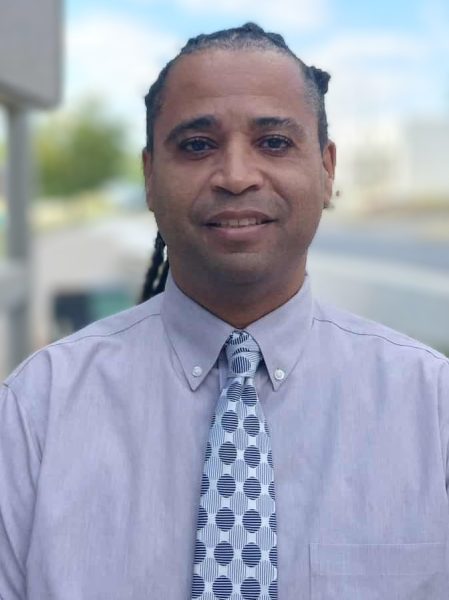
It was the ancestors, elders and members of Michael Morrow’s community — Russellville, Kentucky, and Logan County — who inspired him to share a history many feel uncomfortable revisiting. Morrow decided to produce a documentary, By Parties Unknown, in partnership with Western Kentucky University and PBS.
In By Parties Unknown, Morrow mentions it was a friend of his grandmother, Mrs. Mattie Bell Moorman, who offered him a Bible containing a photo of four lynched Black men. Moorman told Morrow that if she gave him the Bible, he must tell the story.
Also in By Parties Unknown, Morrow says that in the late 1970s and early 1980s, he and an acquaintance were given $25 each to work the door at a disco club. The man who offered Morrow and the other youth the position discovered neither of them could read or count. He gave Morrow the book The Spook Who Sat by the Door and a dictionary, telling him he would help if he needed clarification. The club owner later hired Morrow to clean and allowed him to read in the kitchen during his free time. Morrow taught himself how to read.
At a young age, history, law and government were Morrow’s favorite subjects. During this time, he came across documented materials on slavery, Jim Crow, lynchings and a court case involving a Black man from Olmstead, Kentucky, named Rufus Browder.
Another documentary, Invented Before You Were Born, was produced by descendants of Major Richard Bibb, a 19th-century Kentucky slave owner and former owner of the “big house,” which is now part of the museum where Morrow serves as director. Jonathan and Rachel Knight, producers of Invented Before You Were Born, sought to establish reconciliation among descendants of enslaved people and the slave owner. Every two years, descendants gather for a family reunion in Russellville on the museum’s property.
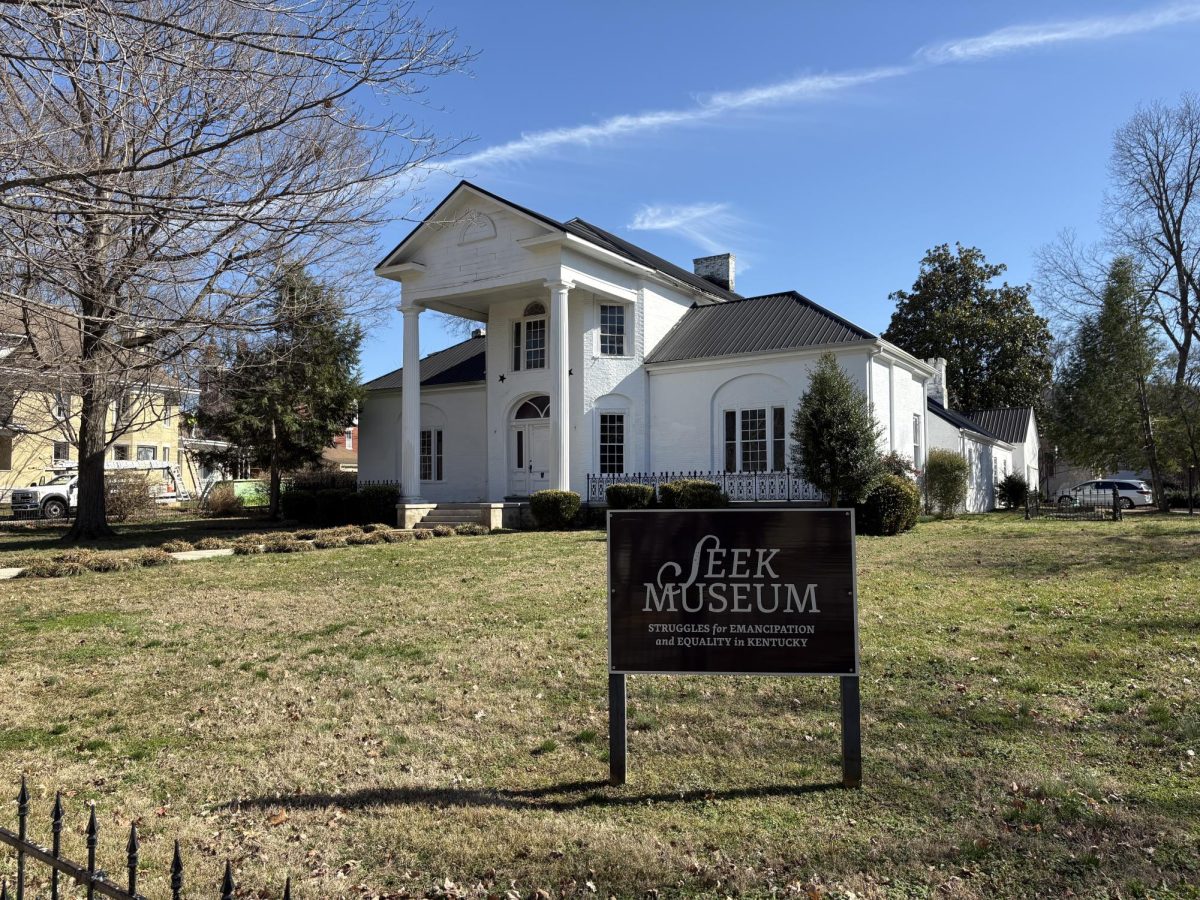
Morrow is the director of the SEEK (Struggles for Emancipation and Equality in Kentucky) Museum, located in Russellville. He is also a curator, scholar-archivist, multimedia producer and historian. SEEK has two historical sites with seven facilities. One site includes a plantation once owned by Major Richard Bibb, located at 183 W. Eighth St., dating to 1817. The other site, on East Sixth Street, highlights the contributions of African Americans during the post-Civil War era.
In 2023, Morrow was recognized as Person of the Year for his contributions to preserving local history.
According to Morrow, the National Memorial for Peace and Justice in Montgomery, Alabama, was founded 10 years after his work on the lynching museum associated with SEEK.
SEEK Museum, once known as the West Kentucky African American Heritage Museum, was established in 2005. Morrow said the name was changed because the original title was too long and SEEK was easier to remember.
Though not the original founder, Morrow was chosen to lead the museum.
“I really didn’t have any interest, if you really want me to be honest with you,” Morrow said. “They were getting ready to form a museum, and everybody knew that I had done a lot of work on Black history.”
He continued: “They asked me to come to a meeting to set up these museums. Out of all honesty, I didn’t want to go. I didn’t want to be a part of any of it. But a guy kind of nudged me to come, and I went. I’ve been working with them ever since.”
Morrow added: “As far as actually coming down and saying I wanted to start a museum, I didn’t even think about that. I didn’t want any part of it.”
Morrow, successful in his work with the SEEK Museum, openly shares that he is a high school dropout.
“My background — out of all honesty — I’m a high school dropout who couldn’t read or write,” Morrow said. “I taught myself how to read and write and eventually got into college. I attended Santa Monica College and Western Kentucky University.”
He added that he was a prelaw major with a minor in government but left school to care for his sick mother and never returned.
Morrow’s passion, unapologetic stance and work ethic are reminiscent of the late Dr. Henry Ellis Cheaney, a leading authority on African American history in Kentucky and a Kentucky State University professor from Henderson.
When considering Morrow’s passion for history, figures such as Ida B. Wells, Drusilla Dunjee Houston, Malcolm X, Charlotta Spears Bass, Dr. John Henrik Clarke, Dr. Maya Angelou, Dr. Frances Cress Welsing, Dr. Yosef Ben-Jochannan, Dr. Runoko Rashidi, Dr. Ivan Van Sertima, M.K. Asante Sr., M.K. Asante Jr., Tony Browder, Atlantis Browder, Tariq Nasheed, Dr. Kaba Kamene and Amadeuz Christ also come to mind.
According to historian, author and lecturer Taj Tarik Bey in the documentary Out of Darkness, manipulation of resources and information has discouraged many Black people from understanding how systems of law, education, economics and politics operate.
“I hate to say it like this, but when you are involved in things with Blacks, sometimes people feel it will make white people mad, and they may not get a job,” Morrow said. “You also have people who don’t understand their history.”
He added that many are reluctant to engage: “They say, ‘Well, we were slaves — that ain’t nothing.’ But people navigated slavery. They don’t see it as intelligence, but enslaved people were very intelligent to survive and keep their families going.”
Morrow said he wanted to change his neighborhood because people feel inferior when they lack knowledge about themselves. Learning that their ancestors were educators and soldiers builds pride in the community.
“If you have a passion for something, you’ll pretty much do it well,” he said.
Morrow emphasized truth over comfort in presenting history.
“A lot of places try to make people feel good,” he said. “There’s nothing wrong with that. But our job is not to make you feel good — our job is to tell the truth. Sometimes the truth makes you feel good, and sometimes it makes you feel bad.”
He added that SEEK’s mission is simple: “Find the facts and tell the truth.”
Morrow said many visitors learn about the museum online, which has also helped him launch a podcast, What Do You Think About Us. On slower years, about 3,000 people visit the museum; in stronger years, attendance can reach 5,000 to 8,000.
He noted that events such as the Cultural Awareness gathering at the National Corvette Museum in Bowling Green bring thousands of visitors, some of whom also visit SEEK.
Morrow said gaining local support can be challenging.
“Local people are the hardest to win over,” he said. “We get support from African Americans across the region, but like many museums, it’s hard to get local backing.”
Artist Willie Roscoe created the Hanging Tree exhibit, housed at the Cooksey House Museum site. It tells the story of four Black men lynched in 1908 for a crime they did not commit.
“People have different reactions,” Morrow said. “Some cry, some pray, some get angry. It’s a necessary story.”
Artist Amanda Matthews sculpted the bronze statue of journalist Alice Allison Dunnigan, located at Alice Dunnigan Memorial Park and the Payne-Dunnigan House site. The statue was first unveiled in 2018 at the Newseum in Washington, D.C.
Dunnigan, born April 27, 1906, in Russellville, and who died May 6, 1983, in Washington, was the first Black woman journalist to report from the White House, Supreme Court, State Department, Senate and House of Representatives.
SEEK also features an exhibit on Mary Ann Fisher, a blues singer from Henderson, Kentucky, who performed with Ray Charles, B.B. King and Little Milton. An annual Mary Ann Fisher Festival is held at the museum.
A historic schoolhouse associated with Booker T. Washington and philanthropist Julius Rosenwald is also located on the site. These schools were built to educate Black children across the South.
Dr. Anne S. Butler, founding director of Kentucky State University’s Center of Excellence for the Study of African Americans, once served as an adviser to SEEK. Butler died in 2013.
Morrow said the museum has hosted visitors from across the country, including professors, national park representatives and public figures.
“People come to see our method because it’s nontraditional,” he said.
Morrow has trained young people to carry on the museum’s work, including leading tours.
Visitors must schedule appointments through the museum’s website, which also allows bookings for events such as concerts and family reunions.
“You go to the SEEK site to get in touch with us,” Morrow said. “And we’ll give you a tour.”